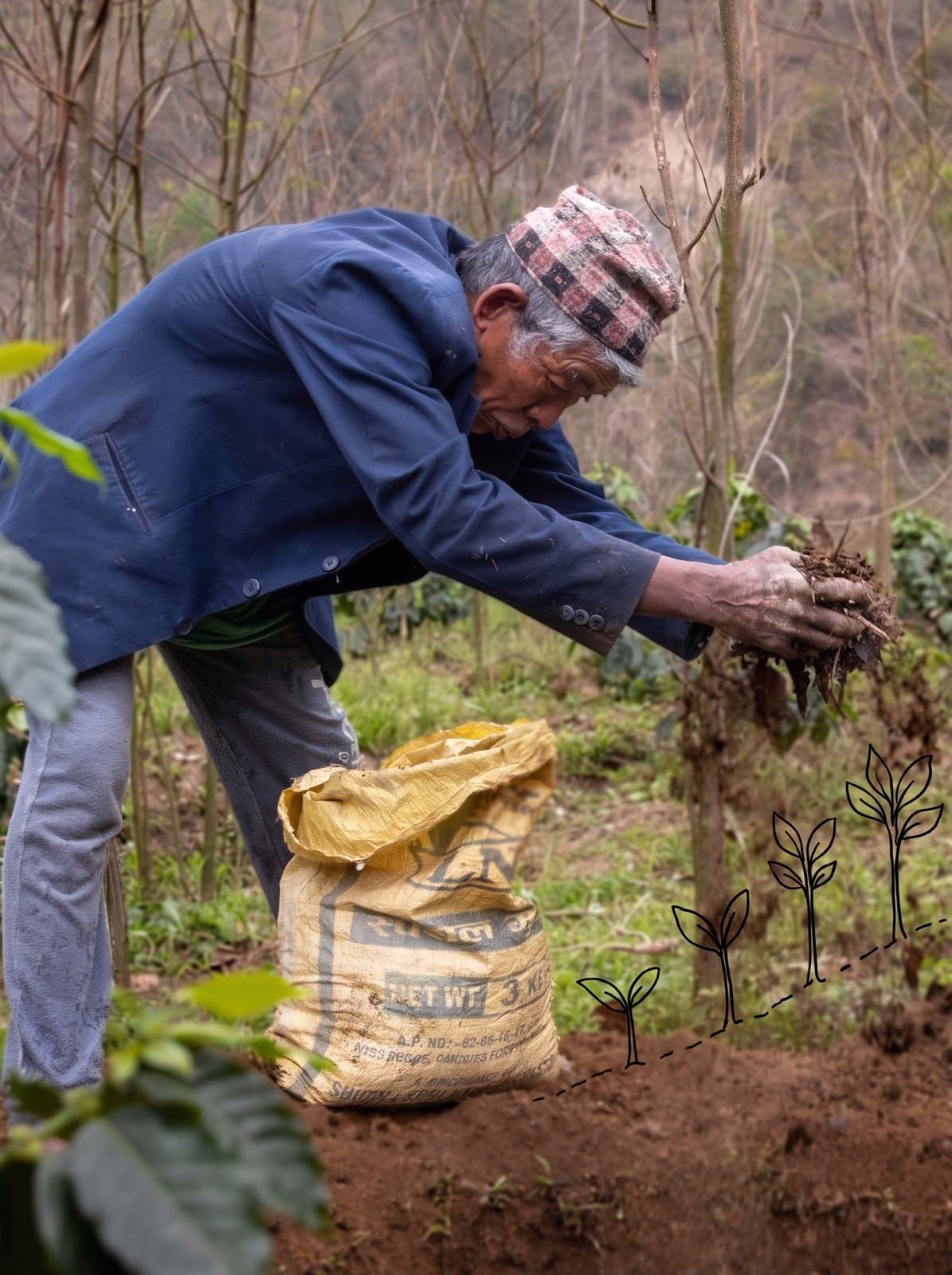
Everything here was planted by hand.
Kavre, Nepal
Cliff Natural Coffee works with family-led farms in Kavre, where cool mountain air, clean water and a lot of patience shape every harvest. Nothing here is farmed at scale, because nothing here could be.
Four years until these are coffee.
1,000–1,600m
Altitude grown
Washed
Clean cup profile
Family farmed
Community supported
It starts on one hillside
Kavre is the largest coffee-growing district in Nepal, which in Nepali terms still means a few hundred hectares stitched together out of smallholdings. Ours sits on a south-facing mid-hill slope between 1,000 and 1,600 metres.
Every lot is processed by the washed method, which is the fussier option and the reason the cup comes out clean and bright rather than muddy.
How a cherry becomes a bean
Coffee is a fruit. Everything between picking it and roasting it is an argument about how to get the seed out without ruining it.
- 1
Picked by hand
Only the ripe cherries, and only the ones that are ready that week. The same tree gets walked several times across a harvest, because a machine cannot tell red from nearly-red and cannot climb that slope anyway.
- 2
Pulped the same day
The outer fruit is stripped off within hours of picking. Leave it longer and the cherry starts fermenting on its own terms rather than ours.
- 3
Fermented, then washed
The seeds sit in tanks for between twelve and thirty-six hours until the sticky mucilage breaks down, then get rinsed clean in channels. This is the step that gives washed coffee its clarity — and the reason it takes so much more water and work than drying the fruit on.
- 4
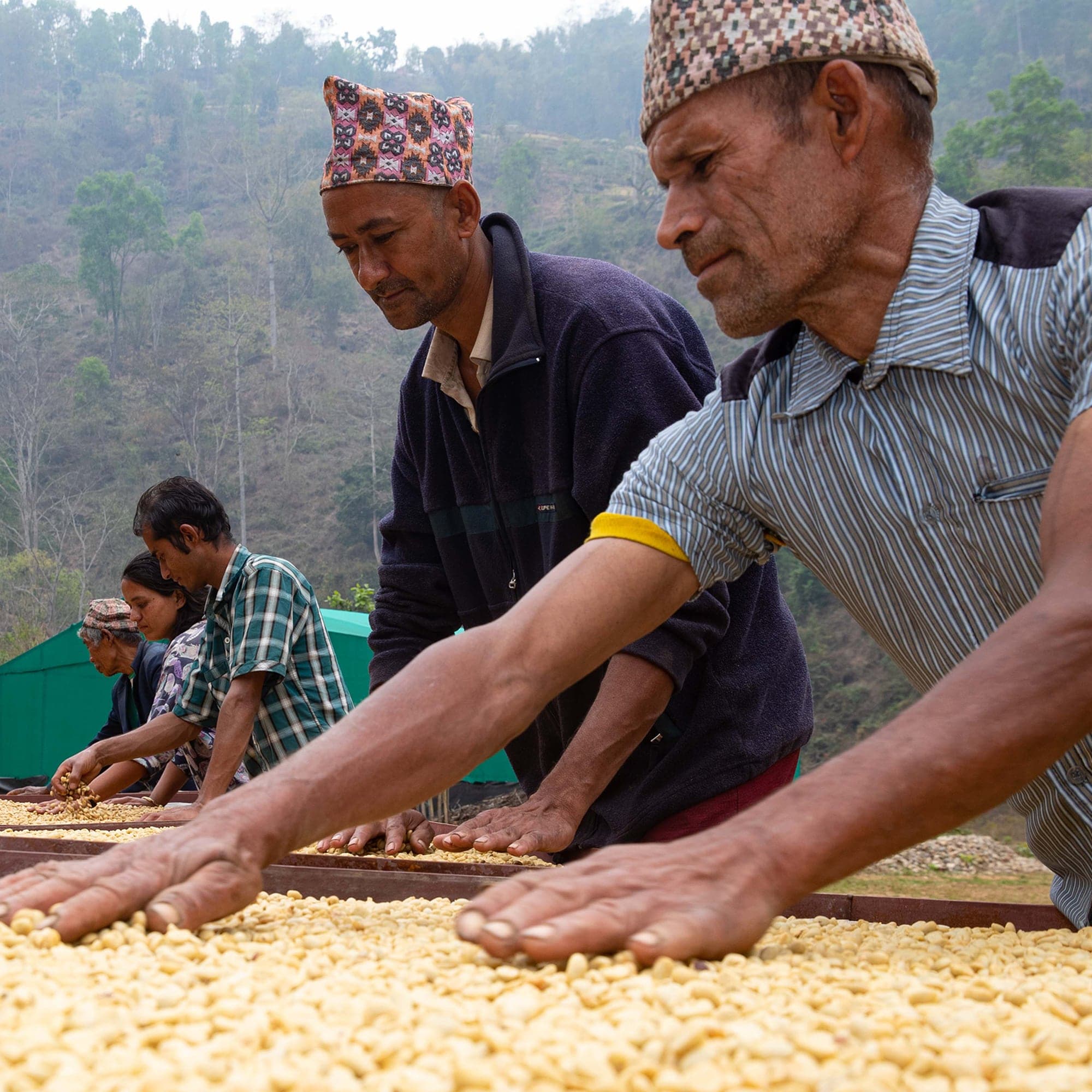
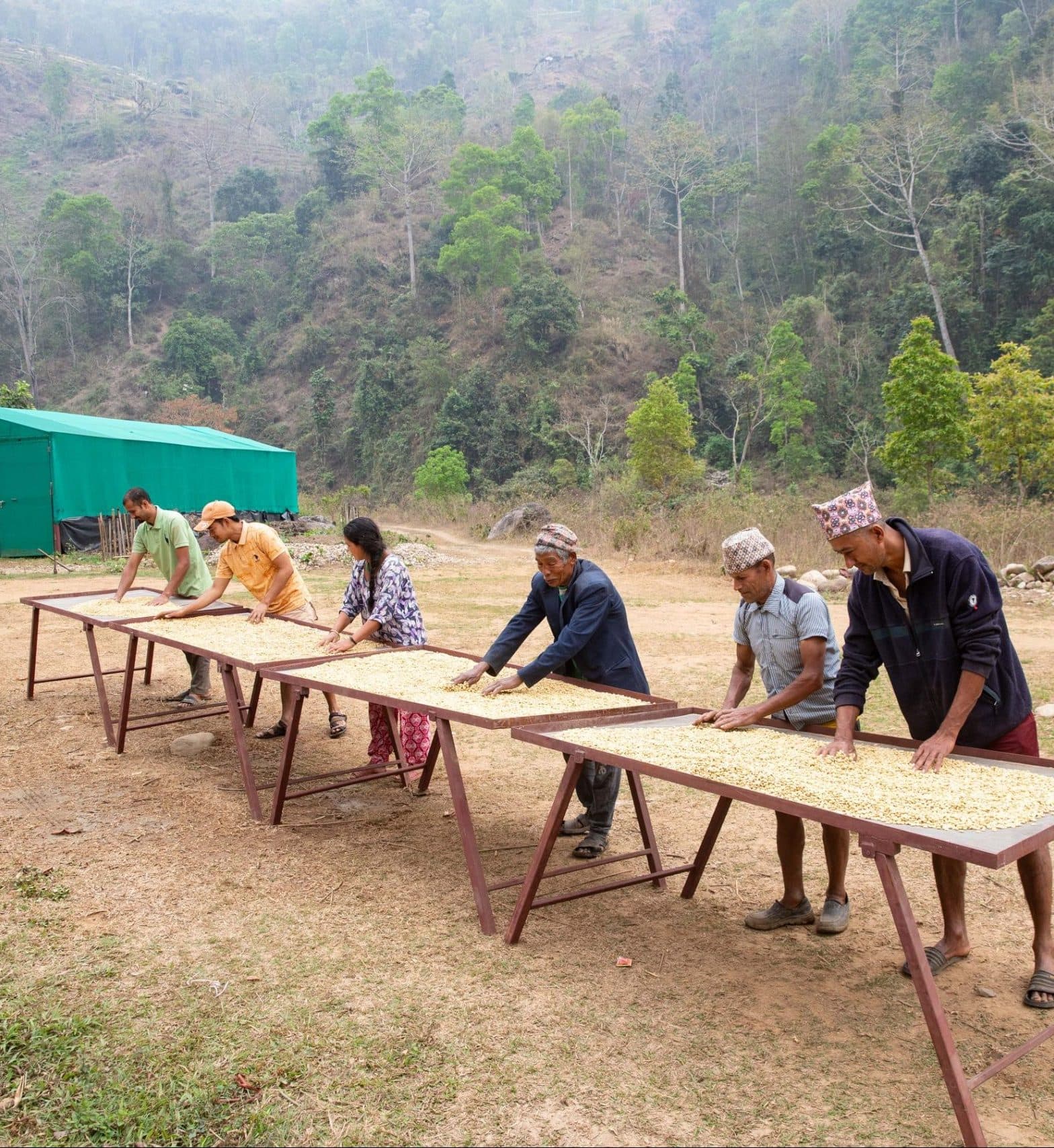
Dried slowly on raised beds
Ten to fourteen days on mesh beds off the ground, turned by hand so they dry evenly and never sit damp. Too fast and the seed cracks; too slow and it moulds.
- 5
Rested, hulled, sorted
The parchment layer comes off, and defects are picked out by hand on the tables. It is slow, unglamorous work and it is most of what separates good coffee from ordinary coffee.
The nursery, and why it exists
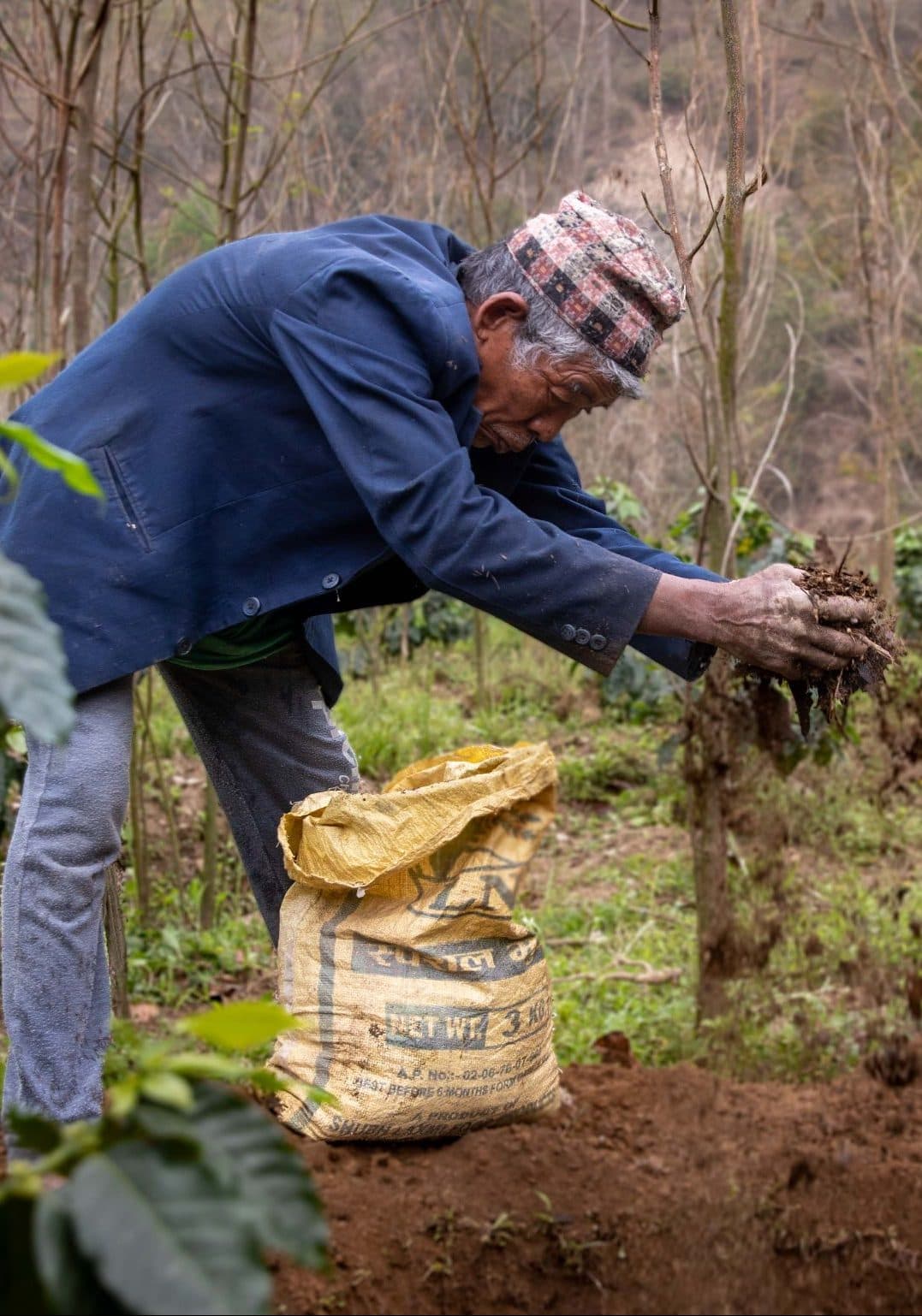
The farm team built a managed nursery to keep the coffee healthy for the long run. It also supports nearby households with technical guidance and free arabica seedlings.
Giving away plants sounds like a strange business decision. It is how a growing region ends up with coffee worth buying in ten years, which is roughly the horizon we are working to.
A household with its own healthy trees has something to sell to whoever pays best. We would rather compete for that than rely on anyone having no alternative.
One coffee, and why
We could list five regions and sell eight coffees. We would rather buy one properly, from the same families, every season — so the growers can plan, and so we can tell you exactly what is in the bag.
- Altitude
- 1,000–1,600m
- High enough that the cherries ripen slowly, which is where the sweetness and the acidity both come from.
- Aspect
- South-facing
- The mid-hill slopes that catch the morning sun and drain well after the monsoon.
- Variety
- Arabica
- Effectively the only thing grown for coffee in Nepal, and the reason the cup is sweet rather than rubbery.
- Process
- Washed
- The fussier option, and the reason the cup comes out clean and bright rather than muddy.
- Roast
- Medium
- Far enough to bring out the chocolate, not so far that the orange peel is burnt off it.