A clean Himalayan cup.
Pour-over · Cafetiere · AeroPress · Drip kit
Four recipes, worked out on our own washed lot — so they are tuned for floral, citrus and dark chocolate rather than for coffee in general. Ratios sit around 1:16.
The wrist circling is optional.
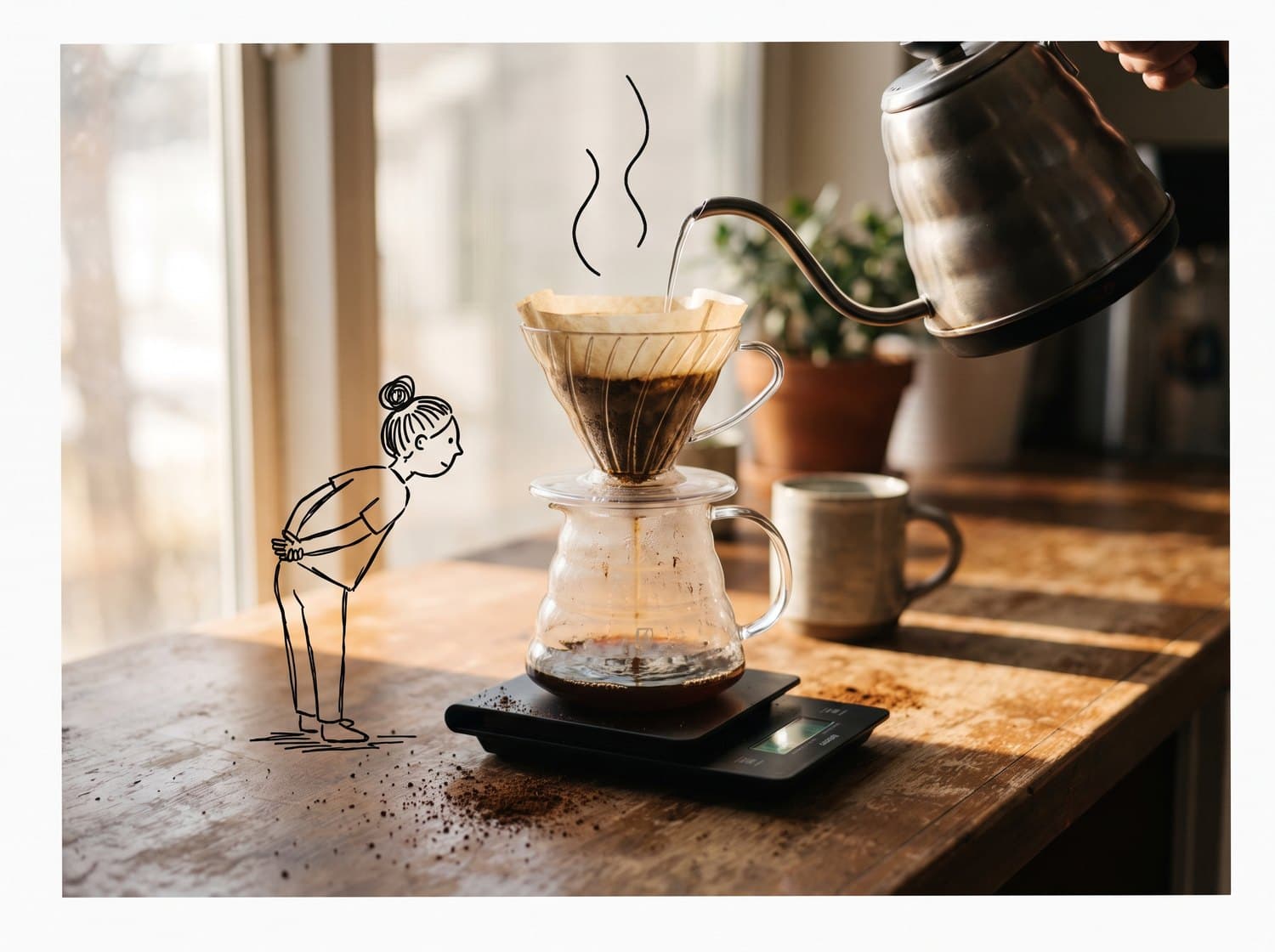
Pour-over
The clearest cup these coffees make, and the method the tasting notes were written on.
- 20g
- coffee, medium-fine
- 320g
- water at 94°C
- 2:30–2:50
- total brew time
- 1
Rinse the paper filter with hot water and tip the rinse away. It removes the papery taste and warms the brewer.
- 2
Add 20g of medium-fine grounds and level the bed with a tap.
- 3
Pour 60g of water and wait 35 seconds. The bed will swell and release trapped CO₂ — this is the bloom, and skipping it is the most common cause of a sour cup.
- 4
Pour in slow circles to 320g total, keeping the bed level and never letting it run dry.
- 5
Aim to finish draining between 2:30 and 2:50. Swirl the jug before you pour.
Cafetiere
Forgiving, heavier in the cup, and hard to get badly wrong. The one to use when you are making coffee for four people.
- 60g
- coffee per litre, coarse
- 96°C
- water, just off the boil
- 4 min
- steep before plunging
- 1
Coarse grounds in the bottom — roughly the texture of sea salt.
- 2
Add all the water at once and start a timer.
- 3
At four minutes, break the crust on top with a spoon and skim off the foam and floating grounds.
- 4
Plunge slowly. Fast plunging forces fines through the mesh and muddies the cup.
- 5
Decant everything straight away. Coffee left sitting on the grounds keeps extracting and turns bitter.
Ask for a coarse grind when you order, or buy whole bean and grind it yourself.
AeroPress
Fast, portable and almost impossible to ruin. Cooler water than you would expect keeps the acidity pleasant rather than sharp.
- 15g
- coffee, medium-fine
- 240g
- water at 88°C
- 2 min
- steep, then a slow press
- 1
Assemble upright with a rinsed paper filter and add 15g of grounds.
- 2
Pour to 240g, stir twice, and put the plunger on top to hold the temperature.
- 3
Steep for two minutes.
- 4
Press slowly — about 30 seconds. If it fights you, your grind is too fine.
- 5
Stop pressing when you hear it hiss. Pushing past that pulls bitterness through.
Drip kit
No equipment beyond a mug and a kettle. What we take up hills, and what lives in the office drawer.
- 1 sachet
- already ground
- 200g
- water at 94°C
- 2 min
- start to finish
- 1
Tear along the top and hook the paper wings over the rim of your mug.
- 2
Pour just enough water to wet the grounds and wait 20 seconds.
- 3
Fill in two or three slow additions until you reach about 200g.
- 4
Lift the sachet out and bin it. Do not squeeze it — that is where the bitterness lives.
How fine is fine
Grind is the dial you turn when something tastes off. Everything else is close enough by comparison.
Coarse
Cafetiere
Like sea salt
Medium
Drip machine
Like coarse sand
Medium-fine
Pour-over, AeroPress
Like fine sand
Fine
Espresso
Like icing sugar
When it tastes wrong
Change one thing at a time, and change the grind first.
- Sour, sharp, thin
- Under-extracted — the water did not take enough out
- Grind finer, use hotter water, or slow the pour down
- Bitter, drying, harsh
- Over-extracted — the water took too much
- Grind coarser or shorten the brew. This is far more often grind than roast
- Weak and watery
- Not enough coffee for the water
- Weigh it. Most people under-dose by a third when they guess
- Muddy, silty in the mouth
- Fines getting through
- Plunge more slowly, or skim the crust before plunging
- Flat and dull, no aroma
- Stale — ground weeks ago, or sitting open on a shelf
- Buy smaller and more often. If you have a grinder, grind immediately before brewing
About the water
Coffee is about 98% water, so bad water makes bad coffee no matter what you paid for the beans. Filtered is enough — you do not need bottled.
Off the boil, not boiling. Around 94°C for filter, cooler for AeroPress. If you have no thermometer, boil the kettle and wait thirty seconds with the lid off.
Keeping it fresh
Sealed, room temperature, out of the light. Not the fridge — coffee takes on the smell of everything around it and picks up condensation every time you open the door.
Ground coffee fades fastest — reckon on a fortnight before it flattens out. Whole beans hold on far longer. Either way, buy smaller and more often rather than one big bag you work through slowly.
Still not right?
Which grind should I pick?
Whole bean if you own a grinder, because coffee starts fading within minutes of being ground. Otherwise: Filter for pour-over and drip machines, Cafetiere for a French press, Espresso for a machine. If you are unsure, Filter is the most forgiving. We grind each order individually, so tell us what you need.
What is a drip kit?
A single-serve sachet of ground coffee with paper wings that hook over your mug. You pour hot water through it and throw it away. No equipment, no washing up — good for travel, offices and hotel rooms.
My coffee tastes sour. What went wrong?
It is under-extracted. Grind finer, use water closer to 94°C, or pour more slowly so the water spends longer in contact with the coffee.
My coffee tastes bitter and drying.
The opposite problem — over-extracted. Grind coarser, or shorten the brew. Bitterness is far more often too fine a grind than too dark a roast.
Need something to brew?
Every recipe here works on our Kavre lot. Tell us which of these you brew with and we grind to match, or buy whole bean and grind it yourself.